
The Pitt Becomes the Defining Streaming Drama of 2026 as HBO Max’s Medical Juggernaut Dominates Television and Redefines Prestige Healthcare Storytelling
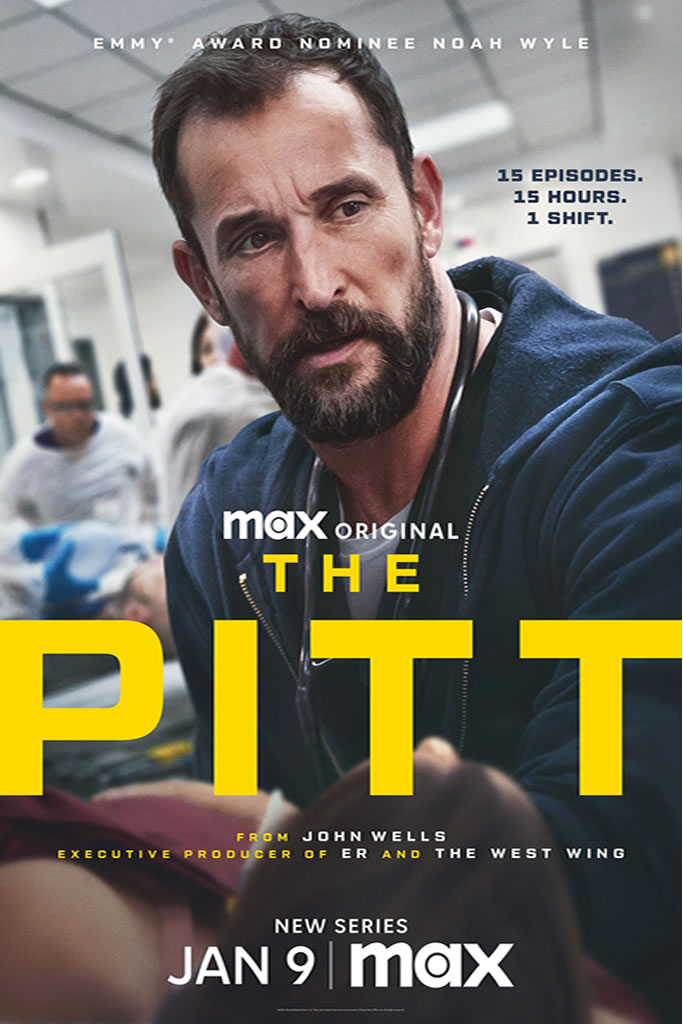
In an era where streaming audiences bounce endlessly between superhero franchises, true crime documentaries, nostalgic sitcom libraries, and algorithm-driven content drops, it has become increasingly rare for a grounded dramatic series to completely seize the cultural conversation. Yet that is exactly what The Pitt has accomplished. The HBO Max phenomenon has not only emerged as the most watched streaming series in America, but it has also evolved into one of the most important television dramas of the modern streaming era — a series that has managed to blend emotional realism, institutional critique, human vulnerability, and relentless dramatic tension into a television experience audiences cannot stop watching.
Now officially sitting at the top of the Nielsen Streaming Top 10 overall rankings, The Pitt has transformed from a breakout medical drama into the defining prestige television success story of 2026. The series reached the No. 1 overall position on the streaming charts for three consecutive weeks through the April 19, 2026 reporting period, with its explosive Season 2 finale generating an astonishing 1.39 billion minutes viewed in a single week. In the current streaming landscape, those numbers are not simply impressive — they are dominant. They place The Pitt in elite company while simultaneously proving that audiences still crave sophisticated adult drama when it is executed at the highest level.
Nielsen Streaming Top 10 Overviews According to the latest Nielsen Household TV Streaming Data for April 13–19, 2026, the series dominated the overall leaderboard:
| Rank | Program Name | Streaming Provider | Minutes Viewed (Millions) | Number of Episodes |
|---|---|---|---|---|
| 1 | The Pitt | HBO Max | 1,388 | 30 |
| 2 | The Boys | Prime Video | 918 | 36 |
| 3 | Bluey | Disney+ | 833 | 154 |
| 4 | The Big Bang Theory | HBO Max | 753 | 281 |
| 5 | Bob’s Burgers | Hulu | 654 | 302 |
What makes the achievement even more significant is the competition surrounding it. Streaming television is now arguably the most crowded entertainment environment in history. Audiences are flooded with fantasy epics, comic-book universes, true crime franchises, animated nostalgia content, and blockbuster streaming exclusives from virtually every major media corporation on earth. Yet The Pitt surged past all of them. The series comfortably outperformed even the heavily anticipated return of The Boys on Prime Video while holding off perennial streaming giants like Bluey, The Big Bang Theory, and Bob’s Burgers.
The numbers alone tell a remarkable story. During the April 13–19 Nielsen measurement window, The Pitt generated 1.388 billion minutes viewed across its available episodes on HBO Max, dwarfing most competitors in the streaming marketplace. But the real story behind the success is not merely statistical. It is emotional. It is cultural. It is creative. And it speaks directly to where audiences are emotionally in America right now.
At its core, The Pitt succeeds because it does something modern television increasingly struggles to do: it feels real.
Set inside a modern Pittsburgh hospital, the series examines the lives of frontline healthcare professionals as they navigate exhaustion, trauma, bureaucracy, ethical dilemmas, institutional politics, staffing shortages, emotional burnout, and the relentless pressure of trying to save lives in a healthcare system that often appears to be collapsing under its own weight. Rather than glamorizing medicine or romanticizing emergency care, The Pitt embraces realism with remarkable intensity. The series understands that modern healthcare workers are not superheroes. They are human beings operating inside impossible systems while attempting to maintain their humanity in the process.
That emotional authenticity has become the engine behind the show’s extraordinary audience connection.
For many viewers, The Pitt feels less like a traditional television drama and more like a reflection of contemporary American life. The stress. The exhaustion. The institutional dysfunction. The emotional compartmentalization required to survive modern professional life. The tension between compassion and burnout. The struggle to remain emotionally available in systems designed around efficiency and survival. The series captures these themes with startling precision, allowing audiences to connect deeply with characters who feel painfully authentic rather than artificially constructed for television.
Much of that success begins with Noah Wyle, whose presence at the center of the series gives The Pitt an extraordinary level of emotional credibility and dramatic gravitas. Wyle’s performance anchors the show with a nuanced understanding of exhaustion, leadership, empathy, and quiet desperation. Rather than portraying a flawless heroic physician, he delivers a layered performance built around restraint, vulnerability, and realism. It is the kind of mature dramatic acting that has become increasingly rare in a streaming ecosystem often dominated by spectacle over substance.
The brilliance of The Pitt also lies in how effectively it balances large-scale institutional storytelling with deeply intimate human moments. Every episode moves between medical emergencies, workplace conflict, emotional collapse, family strain, ethical crises, and interpersonal relationships with remarkable fluidity. The hospital itself becomes a living organism — chaotic, pressured, emotionally volatile, and constantly evolving. The pacing creates an atmosphere of sustained tension while still leaving room for quiet moments of humanity that resonate long after episodes end.
Audiences have clearly responded to that formula at historic levels.
The series crossed the one-billion-minute threshold during 13 of the 15 weeks Season 2 aired, including an extraordinary streak of 10 consecutive weeks above that benchmark. Those numbers reflect not merely curiosity but sustained audience engagement. Viewers are not sampling The Pitt. They are committing to it. They are binging episodes, returning weekly, discussing storylines online, and emotionally investing in the characters and the world the series has built.
Internal HBO Max data reportedly shows the series averaging 15.4 million viewers during its initial 90-day performance window, representing a staggering 50 percent audience increase over Season 1. That kind of year-over-year growth is exceptionally rare for prestige drama, especially in a fragmented streaming marketplace where viewer attention is constantly divided.
Equally important is the fact that the show’s ratings success has been matched by overwhelming critical acclaim. The Pitt currently maintains a near-perfect 98 percent Rotten Tomatoes rating, placing it among the most celebrated dramas currently airing. Critics have praised the series for its writing, realism, emotional complexity, ensemble performances, and refusal to reduce healthcare professionals into simplistic television archetypes.
The industry has taken notice as well. The series has already secured a renewal for Season 3, solidifying its position as one of HBO Max’s flagship dramatic properties moving forward. Awards momentum is rapidly building around the show, including significant attention surrounding the Primetime Emmy race for Outstanding Drama Series.
But beyond ratings, awards, and streaming metrics, The Pitt represents something even more significant culturally.
The series arrives during a moment in American history when healthcare workers remain emotionally and psychologically exhausted from years of systemic strain, public health crises, staffing shortages, political polarization, and institutional instability. For many viewers — especially those working inside healthcare systems — The Pitt feels validating in a way few television dramas have managed to achieve. It acknowledges the emotional cost of caregiving professions without reducing them to melodrama. It portrays healthcare workers not as flawless heroes or cynical caricatures, but as complicated people trying to survive impossible environments while preserving compassion.
That emotional honesty is precisely why the show has expanded far beyond traditional prestige drama audiences. Medical professionals see themselves in it. Working-class audiences recognize the stress and instability. Older viewers connect with the character-driven storytelling. Younger audiences embrace the realism and emotional intensity. The series has become one of the rare streaming dramas capable of cutting across generational and demographic lines simultaneously.
From a broader industry perspective, The Pitt may also signal an important shift in what streaming audiences are now seeking from prestige television. For years, the streaming wars prioritized spectacle — massive budgets, franchise extensions, fantasy universes, cinematic visual effects, and IP-driven storytelling ecosystems. The Pitt proves there is still enormous demand for grounded, adult-oriented dramatic storytelling centered around character, realism, emotional stakes, and contemporary social relevance.
In many ways, the series feels like a return to the golden age of prestige television while simultaneously updating the genre for a modern audience shaped by streaming behavior and post-pandemic realities. It carries echoes of classic ensemble dramas while feeling unmistakably current in both pacing and thematic focus.
The Pittsburgh setting itself also plays a crucial role in the show’s identity. Rather than relying on the overused backdrops of New York or Los Angeles, the series embraces the industrial character and emotional grit of Pittsburgh as an extension of the story’s atmosphere. The city becomes more than scenery — it becomes part of the emotional framework of the series. There is a working-class realism embedded into the tone of the production that strengthens its authenticity and distinguishes it from more polished network medical dramas.
As streaming platforms continue searching desperately for programming capable of generating long-term subscriber loyalty, The Pitt has become a blueprint for sustainable prestige success. It demonstrates that audiences will still rally around emotionally intelligent, carefully written dramatic storytelling when creators trust viewers enough to engage with difficult themes honestly.
The future now looks enormous for the franchise. With Season 3 officially on the horizon, expectations have skyrocketed. HBO Max clearly understands it has found one of the defining dramatic properties of the decade — a series capable of driving critical conversation, awards attention, subscriber engagement, and sustained audience loyalty simultaneously.
More importantly, The Pitt has achieved something increasingly rare in entertainment: cultural relevance with genuine emotional depth.
In a television environment saturated with disposable content engineered for quick consumption, The Pitt has emerged as something far more lasting. It is prestige television with urgency. It is streaming drama with emotional intelligence. It is a medical series that understands the emotional cost of caregiving in modern America. And judging by its unprecedented streaming momentum, audiences are not just watching — they are connecting with it at a profound level.
That is why The Pitt is not merely the top streaming series in America right now.
It is the defining television drama of 2026.