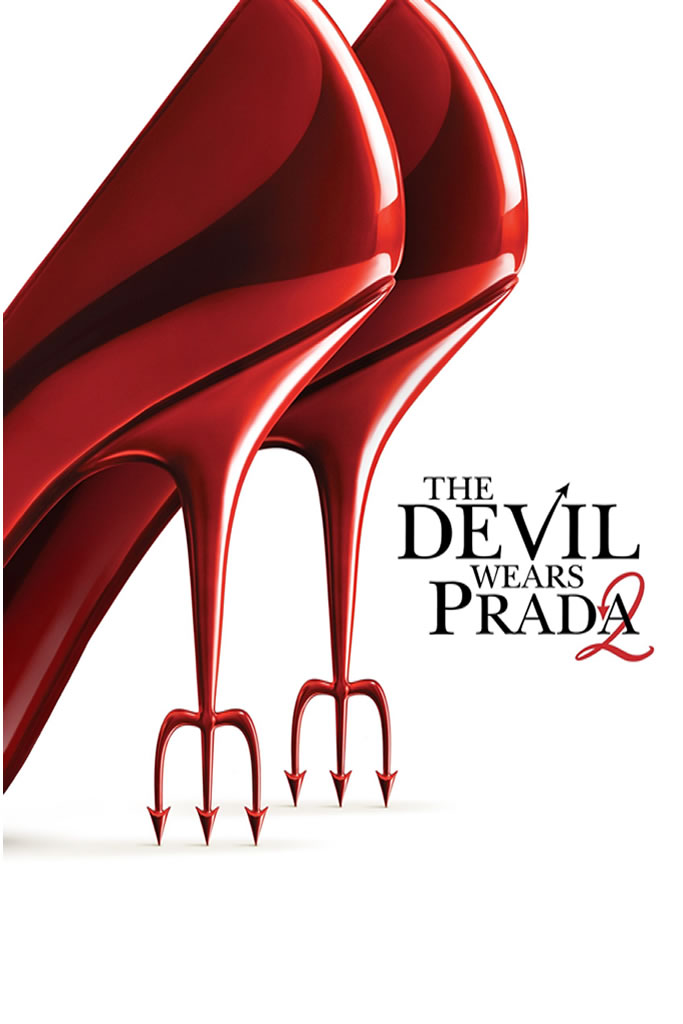
The Devil Wears Prada 2 Arrives Twenty Years Later as a Razor-Sharp Fashion Industry Epic About Media Power, Luxury Culture, and the Collapse of Old Publishing Empires
Two decades after the original The Devil Wears Prada transformed fashion dialogue, office culture, prestige media, and modern pop culture itself, the long-awaited sequel has finally arrived — and rather than simply recycling nostalgia, The Devil Wears Prada 2 explodes onto the screen as a far more ambitious, contemporary, and culturally relevant film than almost anyone expected. Officially debuting in theaters on May 1, 2026, exactly twenty years after the original 2006 phenomenon, the sequel reunites the legendary creative team and iconic cast that helped define an entire generation of prestige studio filmmaking while simultaneously updating the franchise for a completely different world.
The result is not merely another sequel. It is a sophisticated examination of modern media warfare, luxury branding, digital influence, corporate consolidation, generational ambition, and the rapidly collapsing boundaries between journalism, celebrity culture, technology, and fashion power. At a time when the entertainment industry has become saturated with recycled intellectual property and superficial nostalgia plays, The Devil Wears Prada 2 succeeds because it understands precisely why the original film endured for twenty years in the first place: beneath the couture, glamour, and biting dialogue was always a brutally honest story about ambition, identity, survival, and the emotional cost of success.
Now, in 2026, those themes feel even more urgent.
The return of the original core cast instantly gives the sequel enormous dramatic credibility. Meryl Streep returns as the incomparable Miranda Priestly, once again commanding every scene with icy precision, calculated silence, devastating wit, and terrifying intelligence. Anne Hathaway reprises her role as Andy Sachs, no longer the overwhelmed outsider trying to survive the elite fashion ecosystem but now a fully formed media professional navigating a far more dangerous publishing battlefield. Emily Blunt returns as Emily Charlton, whose evolution from abused assistant to ruthless luxury executive becomes one of the film’s most compelling narrative arcs. Stanley Tucci also returns, grounding the film emotionally with the same warmth, elegance, and razor-sharp observational humor that made the original such a lasting classic.
Equally important is the reunion behind the camera. Director David Frankel and screenwriter Aline Brosh McKenna understand that the sequel cannot simply revisit the rhythms of the 2006 original. The world has changed too dramatically. Fashion has changed. Publishing has changed. Celebrity has changed. Media has changed. Influence itself has changed. The sequel wisely embraces that transformation instead of resisting it.
The central narrative pivots away from Andy’s original “fish out of water” story and instead focuses on the collapse of traditional luxury publishing in the age of algorithmic culture, social media influence, venture-capital media ownership, and digitally accelerated consumer behavior. Miranda Priestly now finds herself confronting a threat she cannot easily control: irrelevance. Not because she has lost her intelligence or authority, but because the structures that once sustained elite magazine publishing are disintegrating around her.
Runway magazine — once the untouchable cathedral of luxury fashion journalism — is now under siege from every direction imaginable. Print advertising revenue is collapsing. Corporate consolidation has hollowed out editorial independence. Viral influencers now shape global trends faster than editorial teams ever could. TikTok personalities with smartphones command more immediate attention than traditional magazine covers. Fashion cycles now move at the speed of algorithms rather than seasonal editorial planning.
For perhaps the first time in her career, Miranda Priestly is no longer the uncontested apex predator of the fashion media world.
That vulnerability gives The Devil Wears Prada 2 a dramatic depth that elevates it far beyond standard sequel territory.
At the center of the film’s conflict is Miranda’s escalating battle with Emily Charlton, now reinvented as an extraordinarily powerful executive within a massive global luxury conglomerate controlling the advertising money Runway desperately needs to survive. Emily’s transformation from anxious assistant to polished corporate assassin becomes one of the film’s defining achievements. Emily Blunt delivers a performance filled with ambition, resentment, confidence, and emotional complexity, crafting a character who has mastered the brutal systems that once nearly destroyed her.
The tension between Miranda and Emily becomes symbolic of the broader industry transformation taking place throughout the film. Miranda represents legacy prestige, editorial authority, curation, and institutional power. Emily represents modern corporate luxury influence — data-driven, aggressive, financially dominant, and emotionally detached. Their scenes together crackle with layered history, passive aggression, strategic manipulation, and mutual recognition.
Meanwhile, Andy Sachs returns to New York as Runway’s new features editor, now operating from a position of confidence and professional authority that sharply contrasts her younger self from the original film. But the sequel wisely refuses to portray her as fully comfortable inside the system. Instead, Andy becomes trapped between competing ideologies: Miranda’s devotion to editorial standards and institutional legacy versus the invasive pressure of corporate technology interests attempting to reshape Runway into another disposable digital content platform.
The film’s primary external antagonist emerges through Justin Theroux, who portrays a calculating tech billionaire determined to strip Runway of its legacy identity and transform it into a hyper-optimized digital commerce machine. His character embodies the modern collision between Silicon Valley disruption culture and traditional creative industries. He does not value fashion journalism as art or cultural preservation. He views it as monetizable intellectual property waiting to be streamlined, automated, and scaled.
That conflict gives the sequel a thematic sophistication rarely seen in mainstream studio films. Beneath the glamour and sharp dialogue lies a serious exploration of what happens when art, journalism, creativity, and institutional identity collide with algorithmic capitalism and technological disruption.
The sequel also expands the world of the franchise considerably through its new supporting cast. Lucy Liu enters the story as an elite socialite and glamour icon whose personal history with the tech billionaire becomes unexpectedly central to the survival of Runway itself. Her scenes bring an additional layer of elegance, strategic intelligence, and old-world sophistication to the narrative.
Simone Ashley represents the emerging generation of fashion power players navigating an industry radically different from the one Miranda once dominated. Kenneth Branagh reportedly brings gravitas to the corporate and publishing side of the story, while comedian Caleb Hearon injects sharp observational humor into the increasingly absurd luxury ecosystem surrounding the characters.
The celebrity cameos lean directly into the franchise’s understanding of cultural spectacle. George Clooney reportedly appears in sequences filmed at his actual Lake Como estate, emphasizing the film’s commitment to authentic luxury environments rather than artificial studio excess. Lady Gaga contributes original music to the film, including the song “Runway,” further cementing the project as both a cinematic event and fashion-industry cultural moment.
Visually, the sequel dramatically expands the scale of the original film. Rather than relying primarily on stylized office interiors and editorial workspaces, The Devil Wears Prada 2 moves through a globe-spanning luxury ecosystem of historic architecture, elite fashion spaces, private estates, couture showrooms, corporate towers, and high-society environments that mirror the increasingly globalized structure of modern luxury power.
Production crews reportedly gained extraordinary access to some of the world’s most iconic locations, including the newly restored Waldorf Astoria New York, Manhattan’s newest Dior flagship environment, and the legendary Galleria Vittorio Emanuele II arcade in Milan. These are not simply glamorous backdrops; they function symbolically within the story as monuments to institutional luxury and cultural permanence in a world increasingly obsessed with speed, disposability, and digital immediacy.
Fashion itself also evolves significantly in the sequel. The original film famously centered Andy’s transformation through visually dramatic fashion evolution and overt luxury symbolism. The sequel moves in a far more nuanced direction, embracing the dominance of “quiet luxury,” precision tailoring, layered textures, minimalist prestige, and restrained wealth signaling that currently defines elite fashion culture in the 2020s.
Andy’s wardrobe reportedly leans heavily into sharply structured menswear-inspired blazers and modern editorial sophistication, reflecting her evolution into a serious publishing figure rather than a fashion outsider. Miranda’s aesthetic becomes even more architecturally refined — built around subtle textures, monochromatic layering, and understated authority rather than overt spectacle. The clothing in the sequel communicates power through confidence and precision rather than obvious branding.
That shift mirrors broader cultural changes within luxury itself. In 2006, conspicuous fashion consumption dominated celebrity culture. In 2026, elite fashion increasingly revolves around exclusivity, restraint, tailoring, texture, and insider recognition. The Devil Wears Prada 2 understands that evolution perfectly.
Perhaps most impressively, the sequel manages to retain the sharp humor, emotional intelligence, and biting social commentary that made the original iconic while simultaneously expanding its thematic ambition. The film understands that modern audiences are not simply nostalgic for designer outfits and sarcastic one-liners. They are nostalgic for sophisticated adult storytelling — films willing to examine ambition, work, identity, status, and institutional collapse through sharp writing and emotionally intelligent performances.
The timing of the sequel’s release also feels remarkably strategic. The entertainment industry itself is currently wrestling with many of the exact same issues explored in the film: corporate consolidation, technological disruption, AI-driven media anxiety, collapsing traditional business models, influencer culture, and the growing tension between artistry and algorithmic monetization. In that sense, The Devil Wears Prada 2 becomes more than a fashion film. It becomes a reflection of the modern creative economy itself.
Twenty years ago, the original The Devil Wears Prada became a defining cultural phenomenon because it captured the hidden machinery behind aspirational industries and revealed the emotional sacrifices buried beneath glamour and success. The sequel expands that concept for an entirely different era — one where legacy institutions are fighting desperately to survive in a digital ecosystem increasingly dominated by speed, disruption, and corporate homogenization.
What emerges is a rare modern sequel that actually justifies its existence artistically, culturally, and emotionally.
The Devil Wears Prada 2 is not content to simply revisit familiar characters. It interrogates what happened to them, what happened to the industries they represented, and what happens when an entire cultural system built around editorial authority collides with technological acceleration and modern influence culture.
In doing so, the film accomplishes something remarkably difficult: it honors the legacy of a beloved classic while evolving into something larger, sharper, more mature, and far more culturally relevant for 2026.
For longtime fans, fashion obsessives, media insiders, and audiences craving intelligent prestige filmmaking with style, sophistication, and genuine substance, The Devil Wears Prada 2 arrives not merely as a nostalgic reunion — but as one of the most unexpectedly compelling cinematic events of the year.