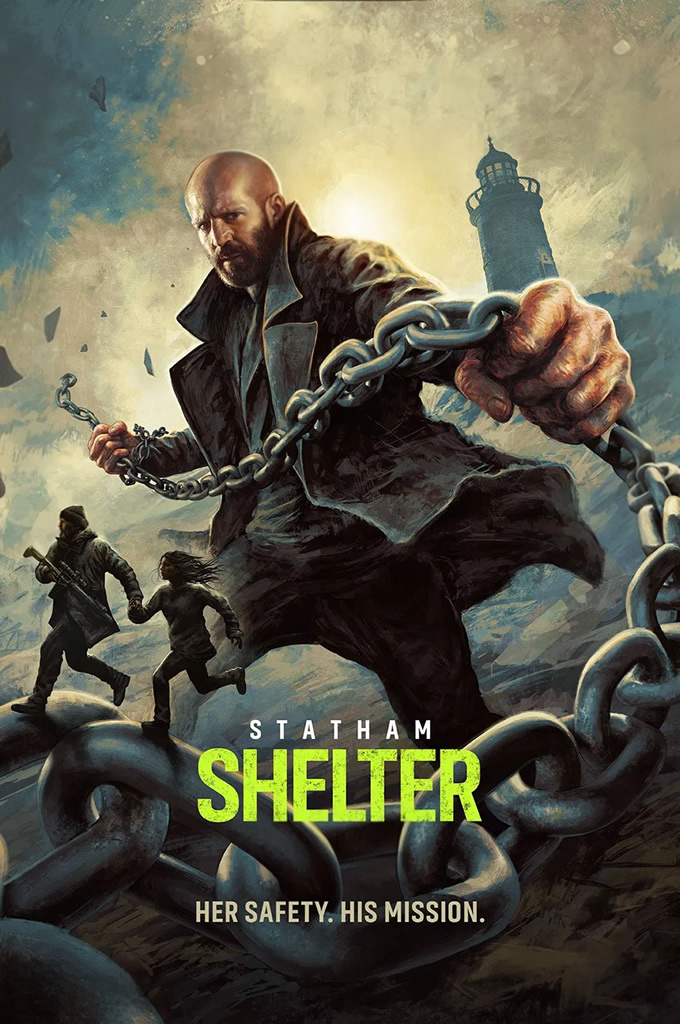
Shelter (2026): Jason Statham’s Most Relentless Role Yet Redefines the Modern Action Thriller

The 2026 action thriller landscape has a new benchmark. Shelter (2026) arrives with force, atmosphere, and emotional gravity—anchored by a commanding performance from Jason Statham that feels both classic and unexpectedly intimate. Directed by Ric Roman Waugh, the filmmaker behind Greenland and Angel Has Fallen, Shelter blends old-school kinetic action with a stripped-down, character-driven survival narrative that positions it as one of the most talked-about thrillers of the year.
Released theatrically on January 30, 2026, and now streaming digitally as of February 24, Shelter is already carving out a space in the upper tier of modern action cinema—balancing emotional stakes with relentless combat choreography and stark, windswept visuals.
This is not just another “protector” film. It’s a character study wrapped inside a high-caliber survival thriller.
A Remote Island. A Forgotten Assassin. A Past That Refuses to Stay Buried.
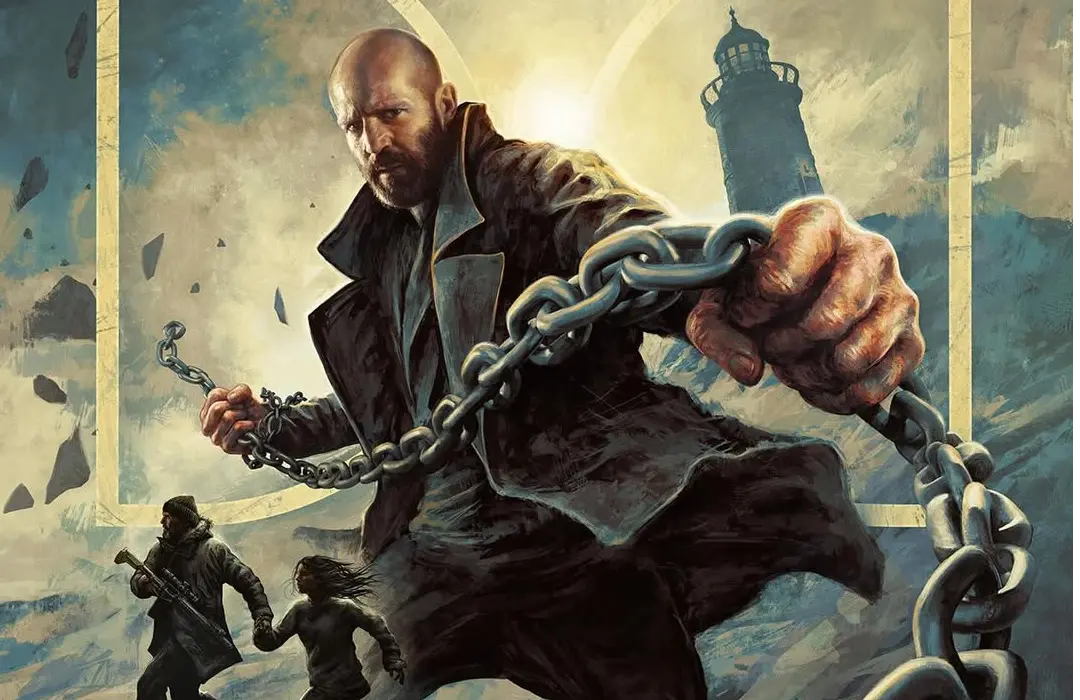
At the center of Shelter is Michael Mason—a former British government assassin who has exiled himself to a remote Scottish island, living alone in a lighthouse battered by wind, salt, and silence. Once a highly efficient operative, Mason now exists off-grid, disconnected from the machinery of state violence he once served.
That fragile anonymity shatters when he rescues a 12-year-old orphan named Jessie from drowning during a violent storm. The act is instinctual—human, even redemptive. But it comes at a cost.
His rescue triggers digital surveillance flags. His location is exposed. And the agency he thought he escaped—MI6—re-enters his life with ruthless intent.
Jessie, portrayed with startling emotional authenticity by Bodhi Rae Breathnach, is not a passive plot device. She is the emotional axis of the film. Her bond with Mason becomes the film’s beating heart, grounding the action in something deeply human. As corrupt intelligence officials and hired assassins close in, the isolated lighthouse transforms from sanctuary into battleground.
The Cast: Precision Performances Across the Board

Statham’s performance is notably restrained. Gone is the overt bravado of his earlier franchise roles; here, his physicality is weaponized with economy. He moves like someone who has survived too much and wants nothing more than to be left alone. Yet when forced into combat, Mason becomes a surgical force of nature.
Opposite him, Bill Nighy delivers a chilling turn as Manafort—Mason’s former handler and now his adversary. Nighy plays the role with understated menace, embodying institutional coldness rather than cartoon villainy. He is less explosive, more calculating—representing the bureaucratic face of betrayal.
Naomi Ackie’s MI6 operative, Roberta, adds another dimension. Her character operates within the system yet subtly questions its morality, injecting ambiguity into what could have been a straightforward pursuit narrative.
Together, the cast elevates what might otherwise have been a conventional action premise into something more textured and psychologically layered.
Ric Roman Waugh’s Direction: Atmospheric, Brutal, Intimate
Waugh has steadily built a reputation for marrying large-scale action with grounded emotional stakes. In Shelter, he sharpens that formula.
The Scottish island setting is not just backdrop—it’s character. The lighthouse stands as a symbol of isolation and moral clarity amid encroaching darkness. The storm sequences are visceral, the fight choreography tight and unpolished, favoring bone-crunching realism over spectacle-driven excess.
The action sequences lean into “old-school” craftsmanship—close-quarters combat, improvised weapons, strategic use of terrain. There’s a tactical authenticity that recalls late-90s and early-2000s action cinema but updated for contemporary audiences.
Critics have noted the film’s adherence to familiar protector tropes, but what separates Shelter is tone. The violence feels consequential. Every encounter escalates the emotional stakes rather than merely increasing body count.
Themes: Redemption, Surveillance, and Institutional Betrayal
At its core, Shelter explores:
- The moral weight of state-sanctioned violence
- The illusion of escape from intelligence networks
- The redemptive power of human connection
- The fragility of privacy in a hyper-surveilled world
Michael Mason is not seeking revenge. He’s seeking disappearance. The film interrogates whether someone who has lived by violence can ever truly step outside it—or whether institutions always reclaim their assets.
The dynamic between Mason and Jessie reframes the narrative from revenge thriller to protective survival drama. Her presence forces him to re-engage with humanity. He’s not fighting for vengeance; he’s fighting for her future.
Reception and Audience Response
With a 64% rating on Rotten Tomatoes, Shelter received mixed critical reviews, though audience response has been notably stronger.
Common praise points include:
- Statham’s grounded, emotionally resonant performance
- The atmospheric Scottish setting
- Practical action sequences with minimal CGI overload
- The chemistry between Statham and Breathnach
Criticism has centered on the familiarity of the premise, though many viewers argue that execution outweighs originality in this case.
In a marketplace crowded with franchise fatigue and CGI spectacle, Shelter delivers something leaner and more focused—an action thriller that remembers character matters.
Box Office and Streaming Impact
After its theatrical debut on January 30, 2026, Shelter transitioned to digital platforms on February 24, 2026, where it has seen strong traction in premium rental and streaming categories.
Its structure makes it ideal for home viewing: intimate tension, contained setting, escalating siege-style action. It’s the kind of film that thrives on repeat viewings—where the choreography and character beats reveal new layers on second watch.
As streaming audiences continue to seek grounded thrillers with practical action and emotional depth, Shelter is positioned for long-tail performance well beyond its theatrical run.
Why Shelter (2026) Matters in the Modern Action Canon
The action genre in 2026 is bifurcated between mega-franchise spectacle and smaller character-driven thrillers. Shelter plants its flag firmly in the latter category while maintaining blockbuster-level intensity.
For Jason Statham, this role signals evolution. Michael Mason is not invincible—he is haunted, weathered, and morally conflicted. The performance adds dimension to Statham’s action résumé and may stand as one of his most complete portrayals to date.
For director Ric Roman Waugh, the film reinforces his reputation for balancing emotional realism with high-stakes action architecture.
For audiences, Shelter offers something increasingly rare: a self-contained thriller with a beginning, middle, and end—no universe-building, no spin-off bait, just focused storytelling.
Final Verdict: A Relentless, Character-Driven Action Thriller
Shelter (2026) is a muscular yet intimate action thriller that delivers both tactical combat and emotional substance. While it may operate within recognizable genre frameworks, its execution, performances, and atmospheric direction elevate it above formula.
This is Jason Statham at his most disciplined. This is action filmmaking that respects gravity, consequence, and character.
Whether you caught it in theaters or are discovering it now on digital platforms, Shelter demands attention.
And in a year crowded with spectacle, that kind of focused intensity is exactly what cuts through the noise.