
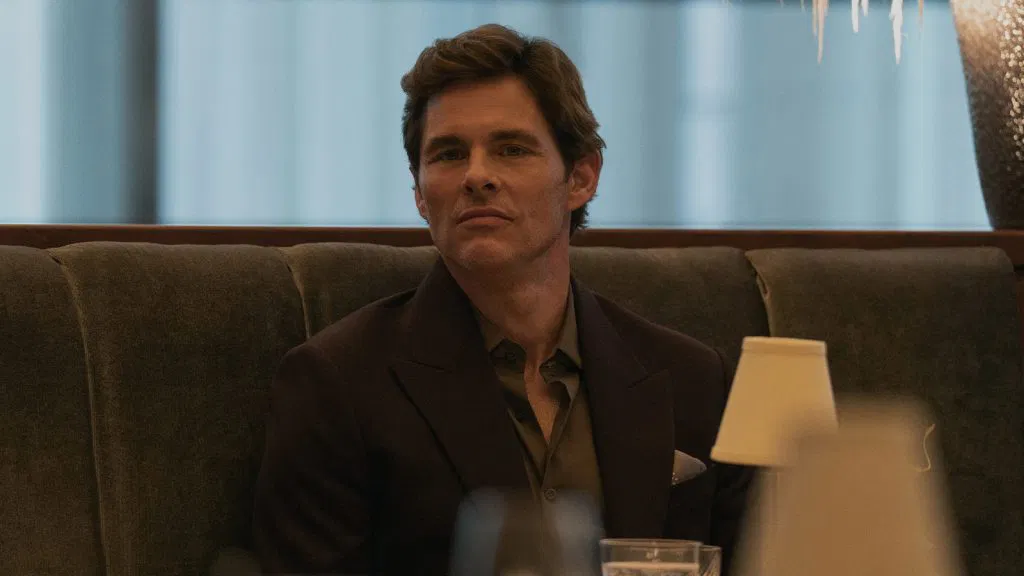
Your Friends & Neighbors Season 2 Finale Delivers Television’s Most Chaotic Cover-Up and Sets the Stage for an Explosive Third Season. One of the most difficult challenges facing any successful television series is figuring out how to raise the stakes without abandoning the qualities that made viewers care in the first place. Too often, writers mistake escalation for excess. Characters become caricatures, storylines become absurd, and the emotional core that originally connected with audiences gets lost beneath increasingly elaborate twists. What makes the second season finale of Your Friends & Neighbors so impressive is that it somehow manages to become completely ridiculous while remaining entirely true to itself. James Marsden’s character may have helped things this season.
By the time the credits roll on “The Night of the Hunter,” the Apple TV+ series has transformed what began as a sharp suburban satire into a darkly comic crime thriller built around panic, bad decisions, and the catastrophic consequences of ordinary people trying to solve extraordinary problems. It is a finale that embraces its own insanity while still grounding every major decision in character. The result is one of the most entertaining season finales television has delivered this year and a setup for Season Three that may ultimately be even stronger than the season that preceded it.
The genius of the finale lies in the fact that almost every problem the characters face is self-inflicted. Owen Ashe’s apparent death at the end of Episode Nine should have resulted in a phone call to emergency services. Instead, it becomes the catalyst for a series of increasingly terrible decisions made by men who convince themselves they are acting rationally. Coop, Nick, and Barney make the classic mistake that fuels so many great crime stories, they believe they can control a situation that has already spiraled beyond their control.
What follows is one of the most darkly hilarious sequences the series has ever attempted. While transporting Ashe’s body, convinced that they are dealing with a corpse, the supposedly dead billionaire suddenly awakens in the backseat and launches a violent attack. The scene works because it fully embraces the absurdity of the premise. Viewers spend several minutes watching grown men engage in what can only be described as a desperate and increasingly ridiculous fight inside a moving vehicle. It is equal parts suspenseful and hilarious, which perfectly captures the tone that Your Friends & Neighbors has spent two seasons refining.
The sequence becomes even more outrageous when Nick swerves to avoid a deer and sends the SUV crashing directly into a lake. At that moment, the story crosses a line from bad decision-making into complete catastrophe. Coop, Barney, and Nick escape the sinking vehicle, but Ashe remains trapped inside and drowns. Ironically, the billionaire survives the original head injury that everyone assumed killed him only to die minutes later in an entirely different manner. It is the kind of narrative twist that sounds absurd when described on paper but works beautifully within the context of the show’s dark comedic worldview and because the actors pull it off.
What truly elevates the finale, however, is what happens next. Instead of recognizing that the situation has become impossible to explain, the trio decides to make it worse. Realizing that finding Ashe’s body in the backseat would immediately raise questions, they swim back into the dark water and reposition his corpse in the driver’s seat to create the appearance of a drunk-driving accident. It is an act of desperation that briefly feels clever until viewers begin considering the overwhelming number of flaws in the plan.
The brilliance of the finale is that it allows the audience to enjoy the cover-up while simultaneously understanding that it has absolutely no chance of succeeding. Even before the episode reaches its conclusion, the cracks in the scheme are already visible. First and foremost, the vehicle belongs to Nick. Investigators are not going to discover a dead billionaire inside his own vehicle. They are going to discover a dead billionaire inside someone else’s vehicle. That fact alone transforms a missing-person case into a major criminal investigation.
The forensic issues become even more problematic. Ashe did not die from the head injury sustained earlier in the evening. He drowned. Any competent medical examiner will quickly determine that he was alive when the vehicle entered the water. Furthermore, the violent struggle inside the SUV almost certainly left physical evidence. DNA, defensive wounds, bruising, and trace evidence do not simply disappear because three frightened men move a body from one seat to another. The cover-up may satisfy the characters, but it would never survive serious scrutiny.
Then there is the simple matter of logistics. Repositioning a body underwater is not as easy as television often suggests. Investigators examine everything from airbag deployment and seating positions to impact trajectories and occupant movement during collisions. The notion that a dead body dragged from the backseat into the driver’s seat would perfectly mimic an authentic accident stretches credibility well beyond its limits. That is precisely why the audience spends the finale waiting for the inevitable collapse.
What makes the aftermath particularly effective is how the series explores guilt. The wealthy suburban community largely assumes that Ashe vanished because of his questionable business dealings, allowing the immediate crisis to fade from public view. Yet while the neighborhood moves on, the men responsible cannot. Nick, in particular, begins unraveling under the weight of what happened. His increasing paranoia, alcohol consumption, and emotional instability transform him into the weakest link in the entire operation.
In many ways, Nick represents the true threat facing the group. Physical evidence can remain hidden. Vehicles can stay submerged. Stories can be coordinated. Human beings, however, are far less reliable. Nick’s drunken confrontation with Barney during the Father’s Day celebration illustrates how fragile their arrangement has become. The fight itself is not merely about Ashe. It is about guilt, fear, resentment, and the growing realization that the secret they share is slowly poisoning every aspect of their lives.
The collateral damage extends far beyond the original cover-up. Barney’s decision to lie to his wife about the altercation destroys what little trust remained in their relationship. Elena’s decision to involve Felix in settling her family’s financial problems creates another dangerous layer of criminality that threatens to engulf everyone involved. Even Coop’s attempts at redemption carry an air of desperation. Returning money, restoring stolen property, and trying to repair past mistakes may ease his conscience, but they cannot erase what happened in the lake.
One of the season’s smartest developments involves Mel. While others spend the finale trying to bury secrets, Mel begins transforming those secrets into something far more dangerous. Her decision to write a book chronicling Coop’s downfall may ultimately become one of the most significant threats facing the entire group. Information has always been power within this series, and Mel suddenly possesses a great deal of it. Whether she intends to expose everything or not almost becomes irrelevant. The mere existence of the manuscript creates a ticking clock hanging over the entire story.
The performances deserve enormous credit for making such an outrageous finale work. Jon Hamm continues to demonstrate why Coop remains one of television’s most compelling protagonists. He balances confidence, panic, intelligence, and self-destruction in ways that consistently keep viewers invested. James Marsden, meanwhile, manages the rare accomplishment of delivering one of the most memorable performances of the season despite spending much of the finale either presumed dead, actually dead, or somewhere in between. The bizarre nature of Ashe’s double death only reinforces how effectively the show embraces dark comedy without losing sight of character.
What separates Your Friends & Neighbors from countless other prestige dramas is its willingness to laugh at the absurdity of its own premise. This is not a show about criminal masterminds. These are not elite operators executing flawless plans. These are deeply flawed people making terrible decisions under pressure. Every attempt to fix a problem creates three new problems. Every lie requires another lie. Every shortcut leads somewhere worse. That constant escalation has become the show’s defining strength.
The final image of the season may be the most important of all. After spending an entire episode watching characters convince themselves they have escaped disaster, the camera returns to the lake. The water appears calm. Peaceful, even. Yet beneath the surface sits the evidence capable of destroying every life connected to the cover-up. When a fisherman’s line catches on something heavy below, the message becomes unmistakable. The secret is not buried. It is merely waiting to be discovered.
That final moment serves as both a cliffhanger and a promise. The vehicle will eventually be found. The body will eventually be examined. Questions will eventually be asked. Whether the investigation begins immediately or unfolds gradually throughout Season Three is almost beside the point. The damage has already been done.
For two seasons, Your Friends & Neighbors has explored what happens when privilege, desperation, and self-preservation collide. The Season Two finale pushes that idea further than ever before. It delivered suspense, comedy, tragedy, and absurdity in equal measure while setting the stage for what could become the series’ most compelling chapter yet. The lake may be quiet for now, but the truth sitting at the bottom of it is anything but. Read on Substack!
Summer House Reunion Part Two: When the Defense Makes the Situation Worse Than the Original Mistake. There are reality television reunions where viewers walk away with a different perspective than they had during the season. There are reunions that provide context, explanations, and occasionally even redemption. Then there are reunions where every attempt at explaining what happened only reinforces why people were upset in the first place.
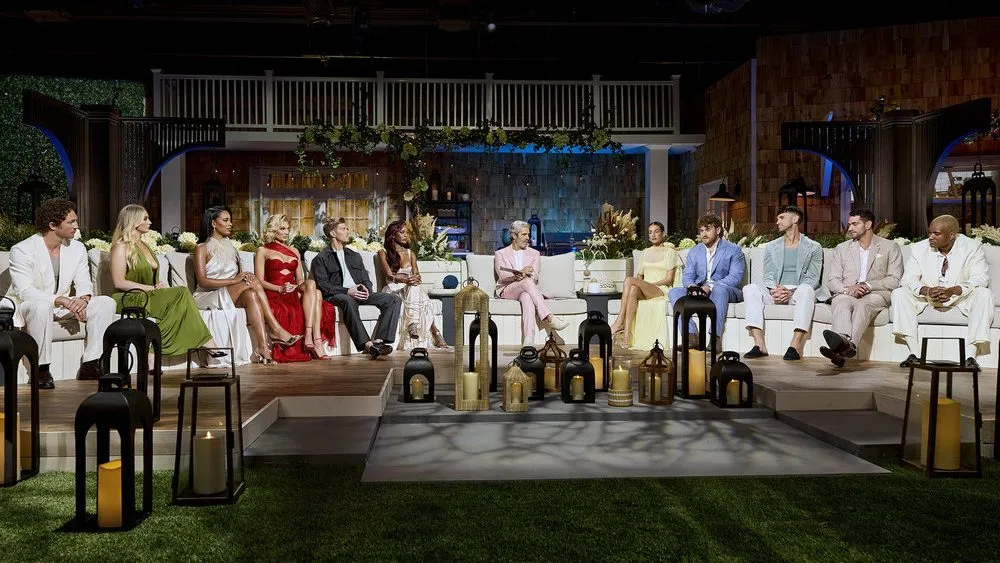
Part Two of the Summer House reunion fell firmly into the latter category.
The remarkable thing about this reunion is not that Amanda Batula and West Wilson found themselves at the center of criticism. The remarkable thing is that they seemed genuinely surprised by the reaction. Even after months of discussion leading up to the reunion, which was taped more than a month ago, as well as all of the public scrutiny, cast commentary, and fan backlash, there still appeared to be an expectation that everyone would eventually shrug their shoulders and accept the explanation that things simply happened.
The explanation essentially boils down to the idea that two people developed feelings, found themselves together, and followed those feelings wherever they led. In their minds, it seems as though the relationship simply evolved naturally and everyone around them should understand that relationships are complicated and emotions are unpredictable.
The problem is that nobody is arguing that relationships are simple.
The issue has never been whether people are allowed to fall for each other. The issue has always been the circumstances surrounding how it happened and the impact it had on friendships that existed long before the relationship began.
That is why the reunion continued to feel less like a defense and more like an exercise in damage control. Every explanation seemed to circle back to the same place. Every justification somehow reinforced the concerns that were already being raised.
Which brings us to the moment that effectively ended the debate.
Dara.
Without revisiting every detail that has already been discussed repeatedly, there comes a point in a reunion where one person says exactly what needs to be said. No more. No less.
Dara delivered that moment. It was the definition of a mic-drop statement, but not in the traditional sense. She was not attacking anyone or trying to get in someone’s face; she was simply being brutally honest. After she spoke, there was very little left to discuss. The room seemed to recognize it. The cast seemed to recognize it. Even the conversation itself appeared to pause because there simply was not much left to add. There was a brief silence as people essentially shrugged and seemed to say, “I’ve got nothing.” Her point had landed, and there was little anyone could do to argue with it.
Sometimes a reality television reunion spends hours circling a topic before somebody finally cuts through all the noise and reaches the core issue. That was Dara’s contribution. If there is one takeaway from Part Two of the Summer House reunion, it may very well be her comments.
What has become increasingly fascinating, however, is the continuing conversation surrounding Ciara Miller.
At some point, viewers have to ask a question that has absolutely nothing to do with this particular relationship and everything to do with the broader picture.
What exactly is happening?
Because from the outside looking in, it simply does not add up.
Let’s start by removing appearance from the conversation entirely because that is the easiest thing to identify and probably the least important factor. Ciara is unquestionably one of the most strikingly beautiful people ever to appear on reality television, or, frankly, on the planet. That is not a recent observation. It has been true for years. Anyone who has watched Summer House for any significant amount of time understands that her looks alone could be intimidating because they are that extraordinary. I would like to blame that, but let’s be realistic: she dated West. So clearly, her appearance is not creating some impossible barrier that prevents people from approaching her.
What makes the situation increasingly puzzling is that her personality appears to be equally strong.
Throughout multiple seasons she has consistently shown intelligence, emotional awareness, humor, loyalty, and a level of maturity that often stands out in a genre not exactly known for emotional maturity. Even during this reunion she delivered one sharp observation after another. More importantly, those observations landed because they were usually rooted in logic.
Take the Jesse Solomon situation.
Many viewers viewed that storyline through a very simple lens, but Ciara’s perspective added another dimension entirely. While others focused on the comments themselves, she seemed to understand what was happening underneath them. What Jesse was doing, intentionally or unintentionally, felt like a massive defense mechanism.
It was the behavior of someone attempting to test the waters before fully committing. A person trying to find out whether rejection was coming before taking the actual risk.
The irony is that Ciara’s eventual assessment may have been correct. An uncomfortable answer early would have been less damaging than the confusion that followed. Because she addressed it directly, the two ultimately found a way back to their friendship.
The other takeaway is the new talking point that West is a “fraud,” a label that came out of both Kyle’s and Ciara’s mouths during this part of that reunion. That idea is now out there and becoming part of the conversation.
First of all, what exactly does West do for a living? Is he a sports radio host or a podcast personality? Where is that happening? Does he actually cover professional sports? Does he work for a team or an organization in some capacity? The show often labels him as a sports commentator, but I cannot recall ever hearing him speak about sports in any meaningful way. Maybe he does, but it certainly has not been a major part of what viewers have seen on Summer House. Based solely on what has been presented on the show, I would be hard-pressed to identify him as someone deeply immersed in the broader world of professional sports.
What continues to puzzle viewers about Ciara Miller is that the obvious explanations never seem to fit. It would be easy to attribute her dating struggles to unrealistic standards, an inability to trust people, or a personality flaw that viewers simply do not see on camera. Yet season after season, none of those explanations seem particularly convincing. Ciara consistently presents herself as intelligent, emotionally aware, funny, and self-assured. More importantly, she appears willing to invest in relationships even when doing so leaves her vulnerable. That is what made the West situation so surprising. Viewers were not watching someone who seemed unavailable or unwilling to commit. They were watching someone who genuinely appeared invested in making the relationship work.
What makes Ciara’s recent Aroma360 campaign—the one with the backward “R” logo—so noteworthy is not simply that she appears in it. Reality stars land advertising campaigns all the time. What stands out is how naturally she fits within a mainstream advertising environment. The campaign does not feel like a Bravo personality making a guest appearance in a commercial. In fact, I had to look up the credits to make sure it was actually her. It feels like a national advertising campaign featuring someone who could easily transition into broader entertainment, fashion, or lifestyle media. That distinction is important because it raises legitimate questions about what might come next for her career beyond Summer House.
Anyway, what else? Talk about being even more perfect, I absolutely love Caitlin Collins, by the way. I’ve never actually watched her show on CNN, but I have always been impressed whenever I’ve seen her moderate a debate or watched clips of her conducting major interviews over the past several years. I remember thinking that she often asks the extra question that other interviewers don’t ask, and she is willing to press for answers on issues that actually matter. That is becoming increasingly difficult to find in the media today. She was on Watch What Happens Live after the reunion that night.
Interestingly, if you think about it, both Caitlin Collins and Simone Sanders have appeared on WWHL recently. In fact, I just realized that Simone Sanders was on Andy Cohen’s show the same night West wore the horsehair tie.
Speaking of which, I assume they brought West’s former girlfriend onto the reunion to confront him about their relationship. That would air this week if she was allowed to be interviewed. What I found most interesting was the fact that Ciara and the woman who had been dating West were able to get on the phone together and actually get along. Considering the circumstances, that may have been one of the more surprising developments to come out of the entire situation so far. I do like it though
Oh, The Southern Hospitality Reunion Part One Proves Why This May Be Bravo’s Most Naturally Chaotic Cast. There is a significant difference between a cast that knows how to manufacture reality television and a cast that simply lives it. After watching Part One of the Southern Hospitality Season Four reunion, it becomes increasingly clear that the Republic crew still falls into the latter category, and that may be the highest compliment a reality show can receive. In an era where many reality personalities appear hyper-aware of public perception, sponsorship opportunities, social media reactions, and future casting decisions, Southern Hospitality continues to operate with a level of unpredictability that feels increasingly rare. These people still make bad decisions, argue about those decisions publicly, double down when they should back down, and somehow manage to create even bigger problems in the process. That authenticity remains the show’s greatest strength.

The first installment of the reunion delivered exactly what longtime viewers expected: confrontations, accountability, shifting alliances, emotional breakdowns, and enough unresolved conflict to carry through the remainder of the reunion. Yet one storyline immediately stood out because, despite an entire season of explanations, accusations, clarifications, and cast commentary, there still seems to be widespread confusion about what actually happened between Trevor and Maddi.
At a certain point during the reunion, I found myself asking not only why everyone kept revisiting last year’s reunion (Including Andy), which seemed to be brought up at least eight different times, but also a much simpler question: Who started this entire mess? Was it TJ? Was it Bradley? Was it someone else entirely?
The storyline, or the lies, depending on how you view it, has evolved so many times that I almost need a flow chart, or better yet, one of Maddi’s PowerPoint presentations, to keep track of the various versions of events. Depending on who is telling the story, the issue involved cheating, emotional infidelity, misunderstandings, rumors, miscommunication, or some combination of all of the above. However, that seems to have been a lie.
At this point, however, I am beginning to wonder whether the entire thing was based on a lie that originated with TJ, Bradley, or perhaps both. Honestly, I am completely lost on that one. The storyline now seems to be less about whether Trevor cheated and more about whether Maddi broke up with Trevor and then, in essence, fell into Joe’s arms because she believed something that wasn’t true.
That raises an even bigger question, Does Maddi still have unresolved feelings for Trevor, especially if he never actually cheated or lied? Don’t get me wrong, Trevor was hardly perfect and often came across as a tool. But if what happened between Trevor, Maddi, and eventually Joe was built on misinformation or outright falsehoods, then that changes the entire story. If a relationship ended because of a lie, that’s not just unfortunate; it’s genuinely unfair to everyone involved. That’s the part of this saga that still doesn’t sit right with me if again, they lied for some odd reason. If there was a reason for the lie, that is also I want to know.
Every time the subject resurfaced during the reunion, the room visibly tightened because everyone appeared to be operating from a slightly different version of the truth. That alone illustrates how messy the entire situation became.
Another major point of discussion involved Emmy Sharrett, who once again found herself at the center of controversy. To be fair, there were moments during the reunion when hearing Emmy explain her perspective provided additional context. Not enough to completely change opinions about some of her actions, but enough to better understand where she was coming from. The larger issue, however, continues to be the way she handles conflict. Time and again, difficult conversations seem to become overshadowed by tears, emotional spirals, dramatic reactions, and attempts to redirect attention toward her feelings rather than the actions being discussed. Whether intentional or not, those moments often come across less as emotional vulnerability and more as an attempt to avoid accountability.
That dynamic was particularly evident during the reunion’s most explosive segment involving Bradley Carter. Much of the discussion centered on Emmy’s use of the word “unsafe” when describing Brad. The criticism was not simply that she was upset. The criticism was that multiple cast members believed she was weaponizing language that carried implications far beyond a disagreement between friends. It was one of the few moments during the reunion where the cast appeared largely united. Regardless of personal loyalties, friendships, or ongoing feuds, there seemed to be broad agreement that Emmy had crossed a line. To her credit, she ultimately acknowledged that possibility. Her apology appeared sincere, and for perhaps the first time in a long while, viewers saw Emmy consider the possibility that she had been wrong rather than merely misunderstood.
The Valley Deep Dive: There is a reason The Valley has quietly become one of the most compelling shows in Bravo’s lineup. Unlike many reality programs that continue to operate as though everyone is permanently trapped in their twenties, The Valley has become a study of adulthood, consequences, and the complicated reality of maintaining relationships when life becomes far more complicated than it once was.

That is why some of the themes this season have nothing to do with relationship drama at all. Instead, they revolve around the amount of screen time devoted to cosmetic procedures, surgeries, enhancements, recoveries, and the seemingly endless conversations that accompany them. Perhaps this is where some viewers will disagree, but there is something exhausting about watching elective cosmetic surgery continually presented as a major empowerment storyline. Everyone has the right to make decisions about their own body, and nobody should be criticized for making personal choices. However, there is a difference between respecting someone’s choices and treating those choices as though they represent some great social achievement.
One of the more interesting developments in modern reality television is the way cosmetic surgery has evolved from something celebrities quietly discussed into something that is now treated almost as a badge of honor. Procedures that once remained private are now storylines. Recoveries become episodes. People look like platypuses, and they wear it proudly today, whereas it once would have been considered a mistake. Consultations become major conversations. Entire seasons can revolve around transformations that are often presented as inspirational journeys. Yet there remains a fundamental question underneath all of it. At what point did elective surgery become something viewers are expected to celebrate rather than simply observe? Set that even aside, watching surgerys are gross. No one wants to see it.
When Dr. Leonard McCoy from a Star Trek film confronts 20th-century neurosurgeons who want to perform surgery on Pavel Chekov, he says, “My God man, drilling holes in his head is not the answer!… put away your butcher’s knives…”.
This episode’s and season’s focus on Brittany Cartwright’s mommy makeover brought that conversation directly into the center of The Valley this week. While many cast members expressed support, concern, or curiosity, the larger discussion often felt disconnected from reality. Surgery is still surgery. Recovery is still recovery. The body still experiences trauma. Yet modern culture increasingly treats these procedures as routine maintenance rather than significant medical events. The Valley deserves credit for showing both sides of the process, but it also unintentionally highlights how normalized cosmetic intervention has become.
Of course, none of this means viewers cannot enjoy the brilliant personalities involved. Lala Kent remains one of the best figures in the Bravo universe, regardless of which side of an argument she happens to be on. Whether people agree with her or not is often irrelevant. For me, she gets a pass on almost anything bercause she is Lala. That includes, metaphorically speaking, sticking her heel into one’s forehead. That said, I do wish she would stop referring to a vagina as a “cookie.” That expression has never made much sense to me, and while she’s at it, she needs to be able to figure out how to deal with women in that way if you get my drift.
Once the surgery conversations fade into the background, however, the season’s most interesting storyline emerges through Danny and Nia Booko. In many ways, they represent the central tension of The Valley itself. On one hand, there is validity to their frustration. Danny and Nia often find themselves surrounded by cast members who spend entire evenings drinking heavily, screaming at one another, making terrible decisions, and creating problems that did not exist a few minutes earlier. Then, somehow, Danny becomes the focus of criticism. It is easy to understand why that feels unfair.
At the same time, Danny continues creating problems for himself that are difficult to ignore. One of the recurring themes this season has been the gap between Danny’s intentions and his behavior. He frequently appears to believe he is being playful, competitive, or entertaining, while everyone around him is reacting to something entirely different. His energy level rises dramatically in social situations. His competitiveness intensifies. His volume increases. What may begin as harmless enthusiasm often transforms into something that feels passive-aggressive, dismissive, or overly intense.
The most revealing moments involving Danny are not necessarily the major confrontations. They are the smaller interactions. They are the moments where he speaks over Nia, minimizes her concerns, or adopts a tone that feels more condescending than supportive. Alcohol often appears to amplify those tendencies, which is why so many discussions eventually circle back to drinking. The issue is not necessarily that Danny drinks. The issue is how dramatically his behavior changes once he does. I am also not saying he acts that way all of the time. His desire to compete, to win, and to dominate situations frequently overrides his ability to recognize how his actions affect the people around him.
What makes the storyline compelling rather than frustrating is Nia. She remains one of the most patient and emotionally intelligent people in the cast. Her ability to navigate conflict without immediately escalating it often highlights the contrast between how she approaches difficult situations and how Danny approaches them. That contrast has become one of the defining dynamics of the season. Viewers are not rooting against Danny. Quite the opposite. Most viewers genuinely like him. The frustration stems from watching someone repeatedly undermine himself when the solution often appears obvious from the outside.
Most of all, take it from me that acting that way eventually comes to a head. She will only tolerate so much before she reacts, lashes out back at you or potentially leave. Then Danny might suddenly realize, “Holy shit, I was married to a former Miss America contestant,” or, more importantly, someone who had been standing by his side the entire time. The condescension is there, and he needs to be very aware of it so he can stop it. It can also be a sign that Danny is not fully satisfied or secure in some aspect of his own life, because people who consistently belittle their spouse or partner are often projecting frustrations of their own.
Elsewhere, The Valley continues exploring the fallout of relationships that never truly end even after the paperwork is signed. Jesse Lally and Michelle Saniei remain locked in a post-divorce conflict that seems to evolve every week. I just heard that she is dating Dr. Dre. The arrival of Lacy Nicole has only intensified an already volatile situation. What makes this storyline fascinating is that it is no longer really about Lacy at all. Instead, it has become a window into years of unresolved resentment, disappointment, and frustration that continue resurfacing through new conflicts.
Michelle’s criticism that Jesse appears to treat Lacy better than he ever treated her struck a nerve because it reflected something deeper than simple jealousy. It reflected a question many people ask after relationships end. However, there is also a logical explanation. If you have just gone through a divorce, the goal is usually to find someone who is more compatible and to learn from the mistakes that contributed to the previous relationship failing.
Lacy also seems very level-headed, which probably helps when it comes to Jesse. Besides, by the time viewers were introduced to Jesse and Michelle, their relationship was already over in many ways. They constantly bickered, competed with one another, and always seemed concerned with who was winning from a perception standpoint. Even on their best days, there was an underlying antagonism between them.
Regardless, Lacy has a calmness about her that makes it difficult not to like her. I almost want to be more skeptical, but for the most part, she comes across as thoughtful, grounded, and emotionally steady. I have no idea whether she and Jesse will ultimately get married, but at the moment they appear to be moving along quite nicely.
Whether Michelle’s perception is accurate or not, it remains a powerful emotional reality for many people after a breakup. To be honest, I had never really thought about it that way. Watching an ex-partner appear happier, calmer, or more successful in a new relationship should, ironically, not be incredibly difficult. In many ways, you should be happy for them because it provides a sense of closure and allows you to move forward with your own life. However, emotions rarely work that cleanly, and The Valley has leaned into that uncomfortable truth throughout the season.
The addition of a cease-and-desist letter to an already complicated co-parenting dynamic only added another layer of absurdity to a situation that already feels like it belongs in a scripted drama. Yet that is one of the strengths of The Valley. The show consistently presents situations that sound unbelievable until viewers remember that real life is often stranger than fiction. I remember her mentioning that cease-and-desist letter, but I had completely forgotten about it until it was brought up again this season.
Meanwhile, Kristen Doute and Luke Broderick continue navigating one of the most significant life transitions anyone can experience. The arrival of their daughter Kaia has fundamentally altered every aspect of their relationship. Parenthood changes priorities, schedules, emotions, and expectations. It introduces exhaustion unlike anything most people have ever experienced. Rather than pretending the transition is effortless, The Valley has shown the genuine challenges that accompany becoming first-time parents. Even though those moments often provide some of the season’s most authentic and relatable content, I am a bit nervous when I see the previews of them in the ads. I just hope Kristen does not push him away for the sake of pushing him away or use it as a way to make a point. He seems like a genuinely good man, so she needs to move forward with her life and avoid playing those kinds of games again. Furthermore, if she committed to working out consistently for six weeks, she would be an absolute machine. Her and Luke should thrive if they deal.
Jason Caperna’s knee injury may not generate the same headlines as some of the relationship drama, but it represents another example of what separates The Valley from many other reality programs. To be honest, he had no business playing basketball if his knee was that unstable. His knee appeared to buckle on what was essentially a routine move to the hoop. There was nothing particularly explosive or athletic about the move that caused the injury. He changed direction. From what we saw, he simply stepped forward and that was it. Boom—he went down. That is why the injury looked so concerning. If a knee gives out during such a basic movement, it suggests the problem was already there long before he stepped onto the court. That was stupid.
As the season continues toward Zack’s planned Mexico getaway and another round of inevitable confrontations, one thing has become increasingly clear. The Valley has evolved beyond being a spin-off. It has become one of Bravo’s most important franchises because it explores territory that many reality shows avoid. It captures the reality of adulthood in all its messy, frustrating, emotional complexity. Some weeks that means divorce. Some weeks that means parenting. Some weeks that means surgery, jealousy, resentment, or friendship. Whatever form it takes, the underlying theme remains the same.
Growing older is complicated. Relationships are complicated. Life is complicated. The Valley understands that better than most shows on television, and that understanding is exactly what makes it worth watching.